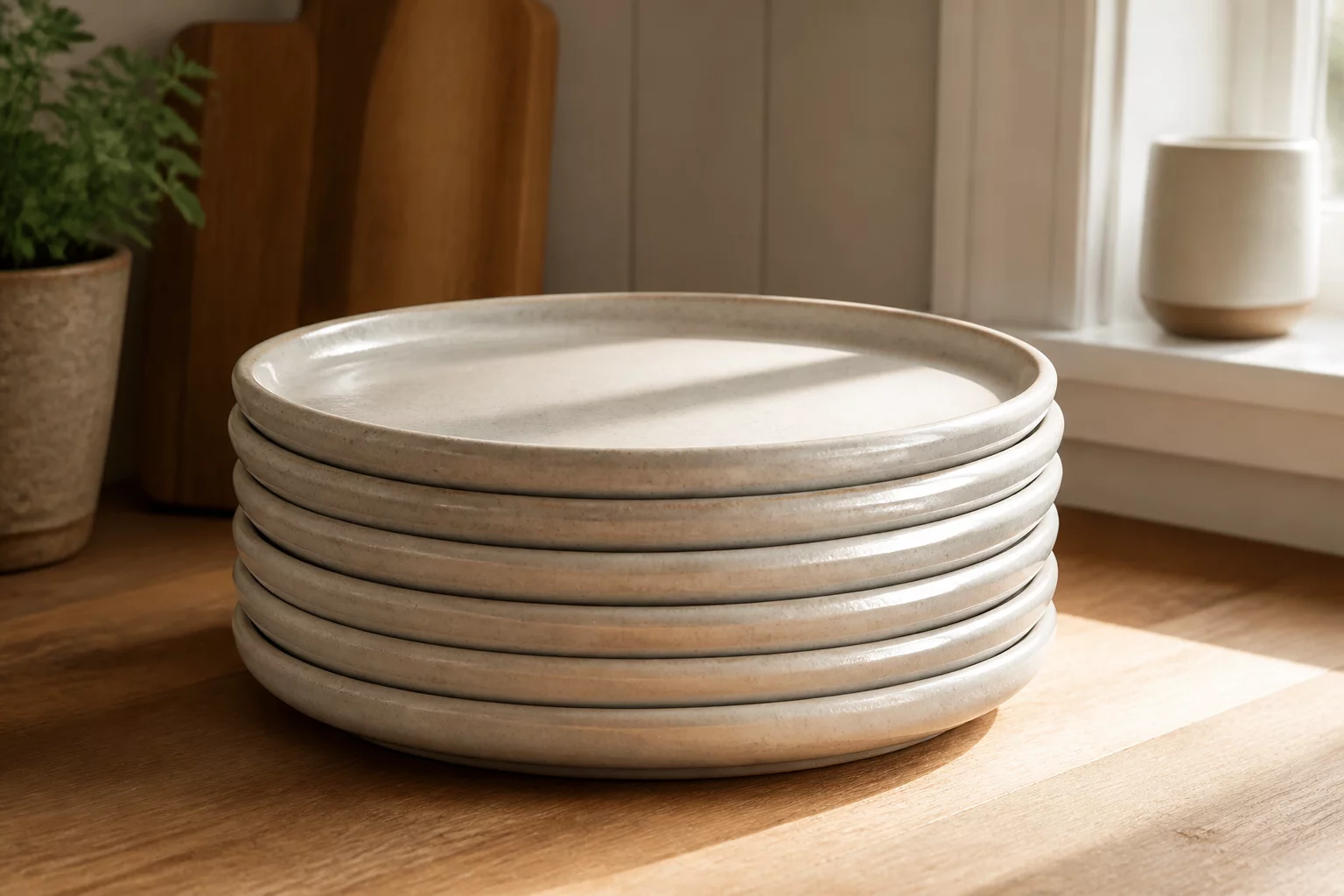
Finding dinnerware that effortlessly survives morning rushes, dishwasher cycles, and lively family dinners while retaining artisanal beauty can feel like a compromise. Stoneware solves this everyday kitchen challenge. Crafted from dense non-refractory clay and fired at temperatures exceeding 1,200°C (2,192°F), it achieves near-vitrification, turning raw mineral clay into an enduring, stone-like substance designed for daily life.
Key Tableware Principles & Materials
Unlike delicate porcelain which requires gentle handling or porous earthenware that easily chips and absorbs moisture, stoneware strikes the perfect balance for busy households. Its thick, sturdy walls offer unmatched thermal mass, keeping soups, risottos, and roasted vegetables hot right through to your final bite. The vitrified structure prevents grease, acidic sauces, and vibrant spices like turmeric from penetrating beneath the glaze.
Daily Maintenance and Care Instructions
Stoneware is naturally dishwasher, microwave, and oven-safe up to standard baking temperatures. To ensure your plates and bowls last for decades without surface crazing, avoid drastic thermal shock. Never transfer a chilled dish directly from the refrigerator into a preheated oven. Hand-wash or use normal dishwasher cycles with non-abrasive detergents to maintain that smooth, tactile semi-matte glaze finish.
- High-density ceramic body fired at extreme heat for superior chip and crack resistance in daily use.
- Exceptional thermal retention that keeps hot meals and morning coffee warmer for longer periods.
- Non-porous glazed surface preventing stain accumulation, bacteria buildup, and persistent food odors.