
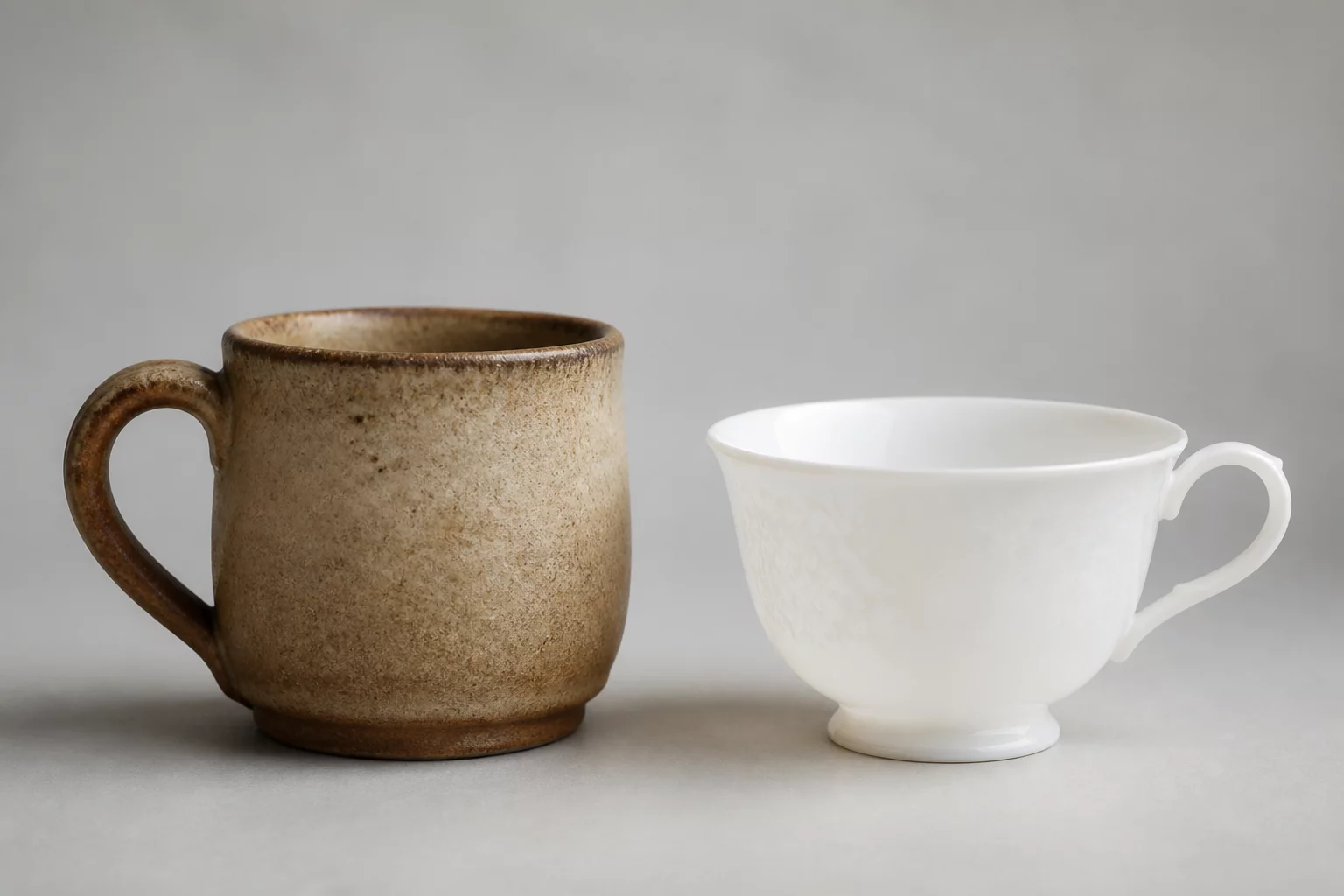
Selecting the right tableware requires an understanding of raw materials and firing techniques. Earthenware and bone china represent two fascinating extremes of ceramic craftsmanship, offering distinctly different tactile weights, levels of translucency, and everyday practicalities for the dining room.
Key Tableware Principles & Materials
Earthenware is created from natural clay fired at lower kiln temperatures, generally between 1,000°C and 1,150°C. Because the clay does not fully vitrify at these ranges, it remains somewhat porous and relies heavily on a protective glaze. This structure yields thick, substantial walls with a warm, earthy character. In contrast, bone china integrates finely calcined bone ash with feldspar and kaolin clay, fired at intense heat exceeding 1,250°C. The bone ash delivers unmatched tensile strength, a warm milky tone, and remarkable thinness that permits soft light to shine right through the rim.
Daily Maintenance and Care Instructions
Each material demands deliberate handling during washing and dining service. Earthenware holds warmth gently, making it pleasant for hearty comfort foods, though its porous core requires protection from sudden thermal shocks. Bone china offers zero porosity and exceptional density, resisting food stains while remaining surprisingly chip-resistant during regular dinner service.
- Shield earthenware from rapid temperature transitions between refrigerators and hot ovens to safeguard the exterior glaze.
- Hand wash gold-accented or decorated bone china cups with mild detergents to preserve their luminous finish.
- Place soft felt pads or dividers between stacked earthenware plates to prevent surface friction and contact marks.